Reviewing the Teacher Shark Embroidery Design
As a designer who has spent countless hours digitizing and stitching out files for clients, I have learned that not every cute graphic translates well into thread. When I first encountered Teacher Shark Do-Do-Do-Do Your Homework, my initial reaction was one of cautious optimism. The concept is undeniably charming, tapping into the popular shark theme while delivering a playful message that resonates with educators and parents alike. However, charm alone does not make a viable machine embroidery design. I needed to determine if this asset would hold up under the needle or if it was merely a flat graphic pretending to be stitch-ready.
First Impressions and Visual Personality
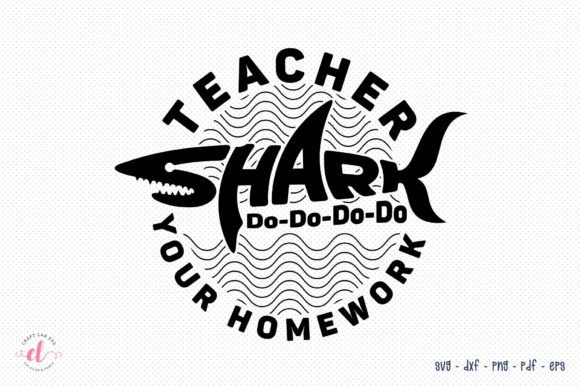
The mood of this piece is lighthearted and energetic. It captures the whimsical nature of children’s media while maintaining a clear educational context. For those of us in the Crafts and Graphics space, we know that clarity is king. The layout appears balanced, with the shark motif serving as the visual anchor and the text providing the narrative punch. In a real-world scenario, this balance is crucial. If the text overwhelms the character, the design loses its appeal; if the character is too complex, it becomes a muddy mess of stitches on smaller items.
From a reviewer’s standpoint, the visual personality suggests this is best suited for projects where fun is the primary goal. It is not a formal or minimalist design. It demands attention. This makes it an excellent candidate for products that need to stand out on a crowded shelf or in a busy online marketplace like Etsy. The key question remains: how does this translate from a digital screen to a textured fabric?
Real-World Application: The Custom Tote Bag Test
To truly evaluate Teacher Shark Do-Do-Do-Do Your Homework, I imagined a specific client project: a custom embroidered tote bag for a preschool teacher’s end-of-year gift. Tote bags are a staple for Etsy sellers and small shop product lines because they are practical and offer a large canvas. However, canvas fabric has a distinct weave that can interfere with fine details.
In this scenario, the design needs to be large enough to be legible but compact enough to fit within a standard hoop without excessive trimming. The shark element likely requires a mix of satin stitch for smooth outlines and fill stitch for the body, while the text might rely on a simpler running stitch or a light fill to prevent puckering. If the stitch density is too high, the heavy canvas could distort, leading to a warped finished product. A successful execution here would result in a crisp, professional-looking bag that the recipient would proudly use, enhancing the perceived value of the handmade product.
Versatility Across Product Lines
Beyond tote bags, this design shows promise for various custom apparel items. Consider sweatshirt embroidery. The thick fabric of a hoodie provides a stable base for denser stitches, allowing the shark’s features to pop. Here, the contrast between the thread colors and the garment hue is vital. A bright blue shark on a navy sweatshirt might get lost, whereas a white or yellow thread choice would ensure visibility.
For baby embroidery projects, such as onesies or bibs, caution is required. Babies have sensitive skin, so the back of the embroidery must be clean. If this design includes dense backing or complex underlay, it might feel scratchy. Additionally, small details in the shark’s eyes or fins could become indistinct on such a small scale. It is essential to check if the design scales down gracefully or if it loses its definition. Similarly, for embroidered patch creation, the design must have a clear border to allow for cutting or merrowing edges without fraying.
Other viable applications include:
- Holiday embroidery gifts for teachers during Christmas or end-of-year celebrations.
- Tote bag design elements for library or school book fairs.
- Decorative accents on pillow covers for classroom reading nooks.
- Personalized aprons for art teachers or cooking class instructors.
Technical Considerations and Potential Pitfalls
While the concept is strong, there are areas where Teacher Shark Do-Do-Do-Do Your Homework requires careful handling. One major concern is lettering. Small, intricate text often fails in embroidery if the font is too thin or if the spacing is tight. Thread has thickness; it cannot replicate the precision of a printed inkjet. If the quote "Do-Do-Do-Do Your Homework" is rendered in a delicate script, it may blur together after washing. I recommend inspecting the text component closely in a preview mode. If possible, test it in black and white mockups to see if the shapes remain distinct without color cues.
Fabric texture also plays a significant role. On fabric texture like terry cloth towels or fuzzy fleece, small details will disappear. This design is better suited for smooth cottons, polyesters, or tightly woven blends. When working with stretchy fabrics like jersey tees, using the correct stabilizer is non-negotiable. Without proper stabilization, the pulling force of the stitches can distort the shark’s shape, turning a cute character into an abstract blob.
Furthermore, consider the hoop size. If you are working with a 4x4 inch hoop, you may need to crop or simplify the design. Attempting to squeeze a complex scene into a tiny space often results in compromised quality. Always confirm the recommended hoop size before starting your embroidery project.
Enhancing Brand Value and Customer Trust
For craft business owners, the quality of the design directly impacts brand consistency. A poorly stitched item can damage customer trust, while a crisp, well-executed piece enhances buyer engagement. Using a well-digitized file like this one can streamline production, reducing the time spent on troubleshooting machine errors. This efficiency allows makers to focus on marketing and customer service.
When presenting this as a digital embroidery file or a finished good, transparency is key. Show close-up photos of the stitching to demonstrate clarity. Highlight the durability of the threads used. For commercial embroidery clients, emphasize the professionalism of the finish. A clean trim job and proper stabilizer removal signal attention to detail, which justifies a higher price point for the finished product.
Practical Designer Notes for Best Results
Before committing to a full production run, follow these practical steps:
- Test on scrap fabric: Always stitch a sample on the same material you intend to use for the final product. This reveals issues with tension, density, and color contrast.
- Check thread color contrast: Ensure the shark stands out against the background. Use a color wheel to select complementary or high-contrast thread palettes.
- Review stitch density: If the design feels stiff after stitching, the density may be too high. Adjust settings if your software allows, or choose a lighter fabric.
- Confirm licensing: Since this is a design asset, verify whether the license permits commercial use. Many designers allow selling finished physical items but restrict the resale of the digital file itself.
- Inspect small details: Zoom in on the digital preview. Are there any stray stitches or overly complex corners that might cause thread breaks?
In conclusion, Teacher Shark Do-Do-Do-Do Your Homework offers a delightful blend of humor and education that fits well within the current market trends for teacher appreciation and kids' decor. Its success, however, hinges on technical execution. By respecting the limitations of thread and fabric, and by applying rigorous quality control, designers and makers can transform this digital graphic into a tangible, high-value item. Whether you are creating a single personalized gift or stocking your online store with small shop product inventory, this design has the potential to delight customers when handled with professional care.