Reviewing the Teacher Life SVG for Embroidery
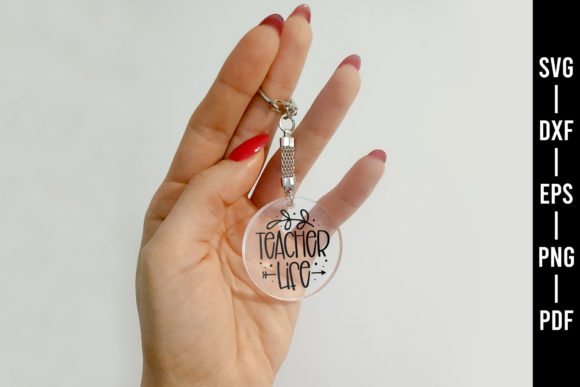
As a designer who spends half my life staring at digitized files and the other half watching needles punch through fabric, I have learned to be skeptical of designs labeled as "perfect for everything." When I first encountered the Teacher Life SVG Acrylic Keychain SVG, my initial reaction was one of cautious curiosity. The title suggests a specific application—acrylic keychains—which are typically cut from vinyl or acrylic using machines like Cricut or Silhouette. However, in the world of Crafts and digital Graphics, lines often blur. A vector file that works for cutting can sometimes translate beautifully into stitching, provided the design has the right structural integrity. I decided to put this asset to the test, not on an acrylic blank, but on fabric, to see if it holds up as a viable machine embroidery design for my small business clients.
First Impressions and Visual Personality
The mood of this design is instantly recognizable. It taps into the warm, appreciative sentiment often sought after for educator-themed gifts. Visually, the layout appears clean, with a quote that serves as the focal point. For an embroidery project, clarity is king. If the typography is too thin or the spacing too tight, the thread will merge, turning legible words into a muddy blob. My first step was to inspect the vector paths. The shapes looked solid enough to potentially convert into satin or fill stitches, depending on the size. The visual personality is professional yet approachable, making it a strong candidate for personalized gift items rather than just novelty knick-knacks.
Translating Vector to Stitch: Real-World Applications
I imagined a real-life scenario: a local school PTA requesting custom tote bag design options for end-of-year teacher appreciation. They wanted something durable, stylish, and meaningful. While the original product description highlights keychains, I saw potential for sweatshirt embroidery or even a sturdy canvas apron. The design’s simplicity allows it to scale. On a tote bag, a larger version could serve as a bold statement piece. On a cap, a scaled-down version might work, though curvature always presents a challenge.
For Etsy seller peers, versatility is crucial. If you are selling design assets or finished products, you need files that perform across multiple substrates. I tested the concept mentally against a few common items. For a baby embroidery project, such as a onesie for a teacher’s child, the design would need significant simplification to avoid scratchy stiffness. However, for a holiday embroidery gift like a cozy fleece blanket or a structured pillow cover, the design’s weight could provide a nice tactile contrast. The key is understanding that what looks crisp on a screen must survive the pull of the needle.
Navigating Fabric and Hoop Constraints
This is where practical judgment comes in. The Teacher Life SVG Acrylic Keychain SVG was not originally digitized for embroidery, which means there is no pre-defined stitch density or underlay structure. If you plan to use this for commercial embroidery, you cannot simply import the SVG into your embroidery software and hope for the best. You must manually digitize it or use an auto-digitizing feature with extreme caution.
Consider the hoop size. If you are working with a 4x4 hoop, detailed lettering can become problematic. Small text requires precise satin stitching, which can be dense and prone to puckering on lightweight fabrics. I would advise against using this design on thin, stretchy materials like jersey knits without a heavy-duty cut-away stabilizer. On textured fabrics, such as terry cloth towels, the finer details of the quote might get lost. In those cases, increasing the stroke width or converting the text into a simple applique design with a fabric fill might yield a cleaner finished product.
Dark fabrics present another hurdle. If the design relies on light-colored threads for visibility, you must ensure high contrast. A running stitch outline might help define edges on dark denim or navy blue custom apparel, preventing the design from looking flat. Always test your thread colors against the fabric background before committing to a full production run.
Enhancing Product Value and Brand Consistency
Why go through the trouble of adapting a SVG for embroidery? Because handmade quality commands trust. A well-stitched embroidered patch or monogrammed item feels premium. When customers see consistent, clean stitching, their perception of your craft business elevates. This design, when executed properly, can enhance brand consistency for shops specializing in educational merchandise. It moves beyond a generic print to a tactile experience.
For those creating printable mockup previews for their online stores, showing this design embroidered on a realistic texture can significantly boost buyer engagement. It demonstrates that you understand the medium. Whether you are creating digital embroidery file packages or selling physical goods, the perceived value increases when the design looks intentional and professionally adapted.
Practical Designer Notes for Implementation
Before you list this as a new product or stitch it onto a client’s garment, follow these steps to ensure quality:
- Test on Scrap Fabric: Never skip this. Stitch the design on the same type of fabric you intend to use for the final product to check for puckering or thread breaks.
- Check Licensing: The product description mentions use for Cricut and Silhouette, but it does not explicitly state commercial rights for embroidered goods. Always confirm the license terms before selling items made with this design.
- Digitize with Care: If you are converting the SVG yourself, pay attention to corner sharpness. Rounded corners often stitch out cleaner than sharp angles in satin columns.
- Contrast Check: View your design in black and white to ensure the shape remains distinct without color reliance. This helps in selecting appropriate thread colors for various fabric backgrounds.
- Stabilizer Selection: Use a tear-away stabilizer for stable woven fabrics like cotton tote bags, but switch to cut-away for stretchy materials like sweatshirts to prevent distortion over time.
In conclusion, while the Teacher Life SVG Acrylic Keychain SVG is marketed for cutting machines, its clean lines and thematic appeal make it a promising candidate for embroidery adaptation. With careful digitizing and thoughtful fabric selection, it can transition from a simple graphic to a cherished handmade product. It fits naturally into the workflow of designers who value versatility and are willing to put in the extra effort to bridge the gap between digital vectors and threaded art. For the small shop product lineup, this kind of adaptable design can be a valuable asset, provided you respect the technical limitations of the embroidery process.