Reviewing the Chef in Training SVG for Embroidery
As a designer who spends half my life digitizing and the other half stitching, I have learned that not every graphic translates well to thread. When I first opened the Chef in Training SVG, DXF, PNG, EPS, PDF package, my immediate reaction was one of cautious optimism. The design carries a playful, whimsical mood that is instantly recognizable, which is crucial for any handmade product intended to catch the eye on a crowded marketplace like Etsy or at a local craft fair. However, charm alone does not make a viable embroidery project. We need to look at how these lines behave under the needle.
First Impressions and Visual Personality
The layout of this digital embroidery file suggests a balance between bold shapes and finer details. The chef theme is universal, appealing to parents, culinary students, and foodies alike. What stands out initially is the clarity of the silhouette. For an applique design or a filled graphic, clean edges are non-negotiable. If the original vector paths are jagged or overly complex, the resulting stitch work will look messy. Fortunately, this design appears to have a visual personality that leans toward simplicity, which is a blessing for machine embroidery. It avoids the trap of excessive intricacy that often leads to thread breaks or fabric puckering.
In terms of mood, it feels approachable and fun. This is not a stiff, corporate logo; it is a design meant for joy. This makes it an excellent candidate for personalized gift items. Whether you are creating a baby embroidery piece for a shower or a humorous apron for a cooking enthusiast, the tone fits perfectly. The inclusion of multiple formats like SVG, DXF, and PNG means you have flexibility. You can use the vector files for cutting machines if you plan to do applique, or the raster images for mockups and sublimation if you are diversifying your craft business offerings.
Real-World Application: The Custom Apron Scenario
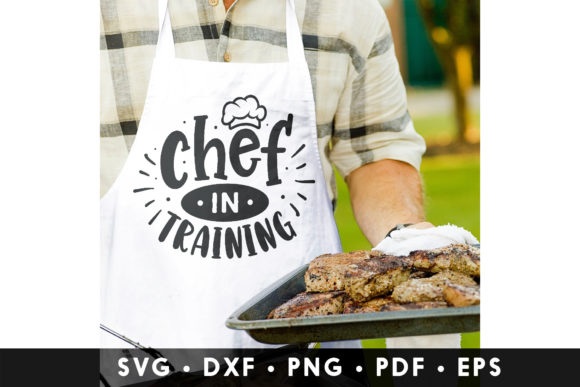
To truly evaluate this asset, I imagined a specific real-life scenario. A client approached me for a set of custom kitchen textiles for a family member who had just enrolled in culinary school. They wanted something durable yet cute. I chose to test the Chef in Training SVG, DXF, PNG, EPS, PDF on a heavy-weight cotton twill apron. This is a common request for small shop product creators.
Using the SVG file, I prepared the design for an applique approach. Applique is often safer for larger graphics on textured fabrics because it reduces stitch density significantly. Instead of filling the entire chef shape with satin or fill stitches, I used a running stitch tack-down, placed the fabric, and finished with a dense satin stitch border. The result was crisp. The quote included in the design required careful attention. Small lettering can be tricky. If the font is too thin, it disappears into the fabric texture. If it is too thick, it becomes a hard plastic-like patch that is uncomfortable to wear. In this case, the proportions seemed balanced, suggesting that with the right stabilizer, the text would remain legible even after multiple washes.
Performance Across Different Products
Beyond aprons, this design has versatility. For sweatshirt embroidery, you must be mindful of the nap. A fluffy fleece can swallow small details. Here, the bold nature of the chef graphic works in your favor. On a tote bag design, the durability is key. Canvas bags take a beating, so ensuring your stitch density is high enough to anchor the threads but not so high that it perforates the fabric is vital. I would recommend a medium-density fill for the main shapes and a slightly heavier satin stitch for the borders to prevent fraying over time.
For holiday embroidery gifts, such as tea towels or napkins, the scale might need adjustment. These items have limited space. You may need to resize the embroidery file to fit a 4x4 or 5x7 hoop. Always check the aspect ratio when resizing to ensure the chef’s hat or utensils do not look distorted. On curved surfaces like caps, the design needs to be centered carefully to avoid wrapping around the side seams, which can cause distortion during stitching.
Technical Considerations and Pitfalls
While the design is promising, there are areas where caution is required. If you are working with stretchy fabric like jersey knits for t-shirts, you must use a cut-away stabilizer. A tear-away might not provide enough support, leading to registration issues where the stitches pull away from the intended path. Also, consider the thread colors. A chef design often relies on white for the hat and coat. White thread on white fabric can lack definition. I suggest using a slight off-white or cream for the fabric, or adding a subtle backstitch outline in a contrasting color to make the design pop.
Dark fabrics present another challenge. If you are stitching on a navy or black garment, you cannot rely on the fabric color to show through gaps. You may need to add an underlay stitch or adjust the design to ensure full coverage. Tiny corners in the design, such as the tips of the chef’s hat or utensil handles, are prone to bunching. Digitizing software usually handles this with tie-off commands, but if you are converting the SVG yourself, pay close attention to these points. A poorly tied-off corner will unravel after the first wash, ruining the professionalism of your finished product.
Enhancing Brand Value and Customer Trust
From a business perspective, the quality of your design assets reflects directly on your brand. Using a clean, well-balanced graphic like this one helps build customer trust. When a buyer sees crisp stitching and a coherent design, they perceive higher value. This is essential for Etsy seller success. A sloppy embroidery job can lead to negative reviews, while a polished one encourages repeat business. The Chef in Training SVG, DXF, PNG, EPS, PDF offers a solid foundation for this, provided you execute the stitching with care.
Furthermore, having access to PNG and PDF files allows you to create high-quality printable mockup images for your online listings. Showing customers exactly how the design looks on an apron or mug before they buy increases conversion rates. It bridges the gap between digital preview and physical reality.
Practical Designer Notes
Before you commit to a large production run, follow these steps:
- Test on Scrap Fabric: Always stitch a sample on the same material and weight you intend to use for the final item. This reveals issues with tension and density.
- Check Stabilizer Compatibility: Match your stabilizer to the fabric. Use cut-away for knits and tear-away for stable wovens.
- Inspect Small Details: Zoom in on the digital file. Are there any stray nodes or overlapping paths? Clean up the SVG if necessary before digitizing.
- Verify Licensing: Since this is a commercial embroidery context, confirm the license terms. Can you sell the finished physical items? Can you resell the digital file? Most designers allow selling finished goods but prohibit redistributing the raw files.
- Contrast Check: View the design in black and white. If the details disappear, you may need to simplify the design or increase contrast in your thread choices.
In conclusion, the Chef in Training SVG, DXF, PNG, EPS, PDF is a versatile and charming addition to any crafter’s library. It fits naturally into the Crafts and Graphics categories, offering both aesthetic appeal and practical utility. With careful attention to hoop size, stabilizer choice, and stitch density, it can elevate your custom apparel and home decor lines. It is a reliable tool for creating memorable, high-quality embroidered items that resonate with customers.