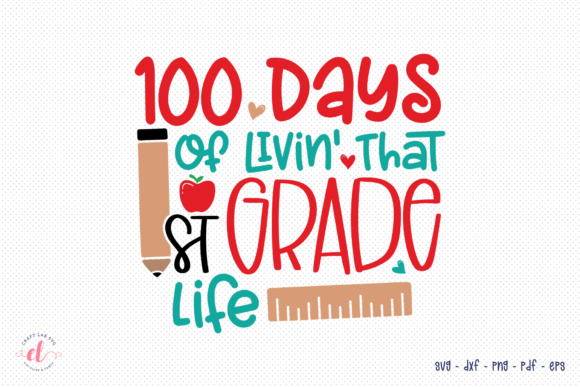
Review: 100 Days of Livin That 1st Grade Life
As a designer who has spent countless hours digitizing and testing files for small business owners, I approach every new machine embroidery design with a critical eye. It is not enough for a graphic to look good on a screen; it must hold up under the needle, survive the wash cycle, and appeal to the end customer. Recently, I evaluated the 100 Days of Livin That 1st Grade Life design to determine its viability for real-world projects. This piece falls squarely into the Crafts category, specifically targeting the educational and commemorative niche that drives significant sales for Etsy sellers and boutique owners each spring.
First Impressions and Visual Personality
The initial appeal of this embroidery file lies in its thematic clarity. The phrase "100 Days of Livin That 1st Grade Life" captures a specific cultural moment in elementary education. Visually, the layout balances playful typography with a structured composition. When reviewing Graphics like this, I look for balance. Does the text flow naturally? Are there awkward gaps that might cause thread breaks or puckering? In this case, the design presents a confident, celebratory mood. It feels less like a rigid academic marker and more like a fun milestone celebration, which is exactly what parents and teachers want to convey.
The inclusion of two versions, including a black color variant, is a practical touch. For those of us creating custom apparel, having a monochrome option simplifies the stitching process and reduces thread changes, which is crucial for production efficiency in a small shop product line.
Real-World Application: The Sweatshirt Test
To truly understand how this design performs, I imagined applying it to a heather grey youth-sized sweatshirt. This is a common request for personalized gifts during the school year. The 100 Days of Livin That 1st Grade Life motif sits well on the chest area, where visibility is high but the fabric is stable enough to support the stitch density. Unlike an applique design that requires cutting fabric, this appears to be a standard fill or satin-based execution, meaning it relies heavily on proper stabilization.
If you are an embroidery decorator planning to use this for sweatshirt embroidery, consider the texture of the garment. Fleece and cotton blends can hide minor imperfections, but they also eat up thread. The bold nature of the quote suggests it uses substantial fill stitch areas. This creates a rich, textured look that adds perceived value to the handmade product. Customers often associate heavier stitching with higher quality, provided the backing does not feel stiff or scratchy against the skin.
Versatility Across Product Lines
Beyond apparel, this design has legs in other categories. Imagine it stitched onto a canvas tote bag design for a teacher’s gift. The durability of the stitch would withstand the weight of books and supplies. For baby embroidery projects, such as a onesie or a bib, the scale becomes critical. You must ensure the lettering remains legible when resized. Tiny details in the "100" or the decorative elements might merge if the hoop size is too small or the stitch count is too dense for fine knit fabrics.
For those running a craft business, this asset fits seamlessly into holiday embroidery collections or back-to-school promotions. It works as a standalone embroidered patch if digitized with a border, allowing for application on items that cannot be hooped directly, such as thick jackets or finished backpacks. As a digital embroidery file, it serves as a versatile component in your library of design assets.
Technical Considerations and Stitching Challenges
While the aesthetic is strong, practical execution requires attention to detail. Here are the key technical factors I noted during my evaluation:
- Stitch Density: Check the density settings before stitching on thin fabric. High-density fills can cause puckering on lightweight t-shirts. Always use a cut-away stabilizer for stretchy materials to maintain shape.
- Thread Colors: The design likely relies on contrast. If using the black version on dark garments, you may need to adjust the thread colors or add an underlay to ensure visibility. Test on scrap fabric first.
- Hoop Size: Confirm the dimensions fit your available hoops. A design that is too large for a 4x4 hoop but too small for a 5x7 might require resizing, which can distort the lettering proportions.
- Fabric Texture: On textured fabrics like terry cloth towels, small details may get lost. This design is best suited for smooth surfaces like jersey, cotton, or canvas.
When working on curved surfaces like caps, be cautious. The horizontal layout of the text might distort if not properly stabilized with a cap frame. For custom apparel intended for frequent washing, ensure the thread type matches the fabric care instructions. Polyester thread is generally recommended for its durability and colorfastness in school environments.
Commercial Viability and Brand Consistency
For the Etsy seller or creative entrepreneur, the 100 Days of Livin That 1st Grade Life design offers a clear selling point. It taps into a seasonal trend with high emotional value. Parents love documenting these milestones, and a professionally embroidered item stands out against mass-produced printed shirts. The finished product exudes a sense of care and craftsmanship that builds customer trust.
However, professionalism is key. Ensure that your mockups accurately represent the final look. Use printable mockup tools or photograph actual samples to show the texture of the stitches. This transparency helps manage buyer expectations and reduces returns. If you are selling the digital embroidery file itself, clearly state the license terms. Most designers allow commercial use for physical products but restrict the resale of the digital file. Always verify this before listing.
Final Verdict for Designers
In summary, this design is a solid addition to any educator-focused or seasonal collection. It balances visual appeal with practical applicability. To get the best results:
- Test the design on similar fabric weights to your final product.
- Review the stitch path to minimize jumps and trims.
- Compare light and dark fabric backgrounds to choose the best version.
- Confirm the licensing agreement for commercial embroidery projects.
The 100 Days of Livin That 1st Grade Life design is not just a graphic; it is a tool for creating memorable keepsakes. With careful attention to stabilizer choice and thread tension, it can elevate your small shop product lineup and delight customers looking for unique, personalized items. Whether you are decorating aprons, pillow covers, or classroom banners, this file provides a reliable foundation for high-quality embroidery work.